Aging-in-Place & ADA Bathroom Remodeling in the Quad Cities (2026)
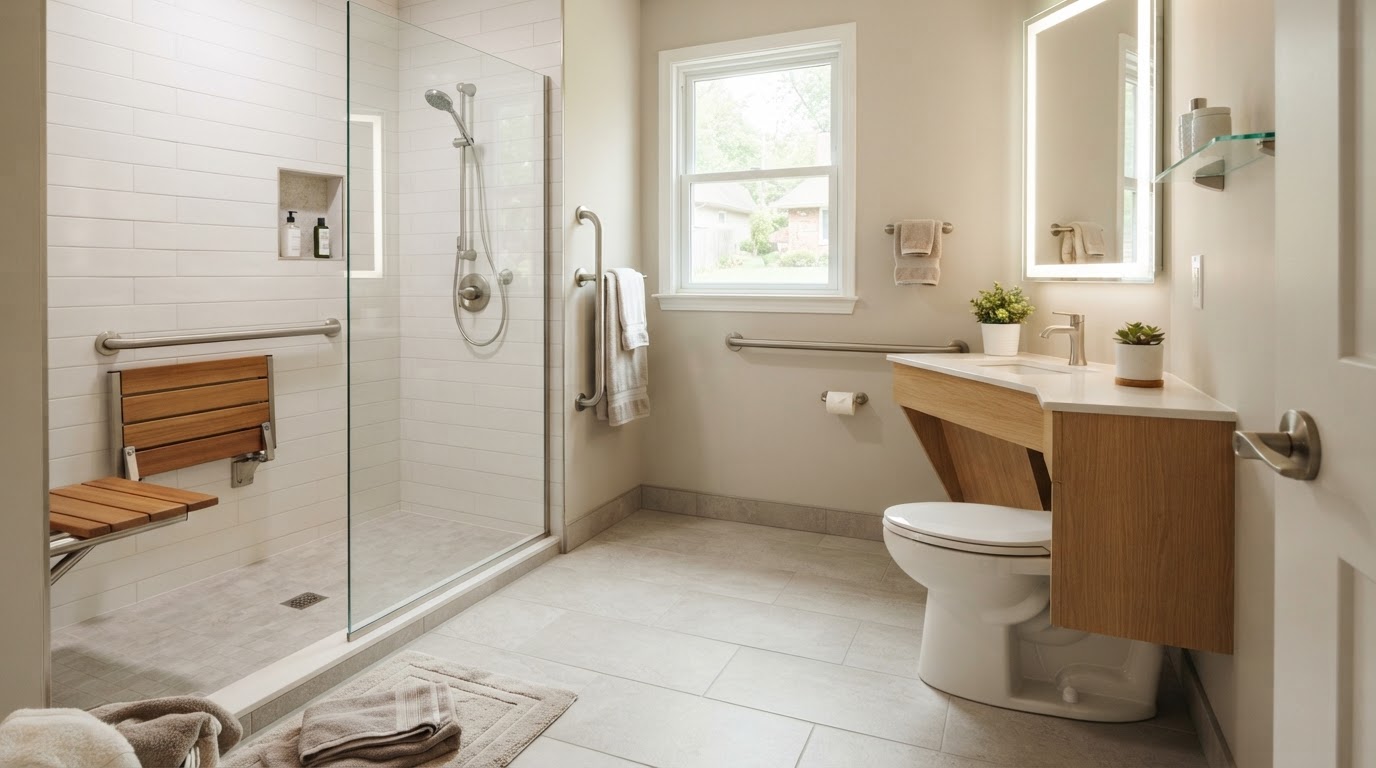
An aging-in-place bathroom remodel in the Quad Cities typically costs $6,000 to $12,000 for a walk-in shower conversion and $15,000 to $30,000 for a full accessible bath. Demand is surging, with 76% of remodelers reporting rising aging-in-place requests.
TL;DR Takeaways
- Demand is surging: 76% of remodelers report rising aging-in-place requests (NAHB 2025).
- Core upgrade: A curbless shower runs $6,000 to $12,000 plus 20 to 30% for zero-entry.
- Plan ahead: Remodel before a fall forces the decision, not after.
Why Aging-in-Place Demand Is Surging in the Quad Cities
Aging-in-place bathroom remodeling is one of the fastest-growing segments in the Quad Cities renovation market. According to the NAHB Q1 2025 Remodeling Market Index, 96% of remodelers say their customers know the aging-in-place concept. A combined 99% show receptivity. And 76% report that aging-in-place requests have risen over the past five years.
The reason is simple. The Quad Cities has a significant retiree population across Davenport, Bettendorf, Moline, and Rock Island. Many homeowners want to stay in their homes as they age, rather than move to assisted living. But most existing bathrooms were not built for changing mobility needs.
US Census data shows only about 10% of American homes are aging-ready. That means the vast majority of Quad Cities homes built before 2000 need modifications to support safe, independent living. The bathroom is where most falls happen, so it is the logical place to start.
By the Numbers
Aging-in-place remodeling data (NAHB 2025 & US Census)
The Accessible Bathroom Checklist
A true aging-in-place bathroom goes beyond adding a grab bar. It is a coordinated set of features that work together to reduce fall risk and support independent use. Here is the checklist our network contractors follow.
- Blocked-in grab bars: Anchored into wood blocking or studs behind the wall, not surface-mounted into drywall. These hold real body weight.
- Curbless or zero-entry shower: No step at the threshold. The floor flows straight into the shower for walker or wheelchair access.
- Fold-down bench: A wall-mounted seat that folds up when not in use. Gives a place to sit safely.
- Handheld showerhead plus fixed head: A slide bar lets you adjust height. Works seated or standing.
- Comfort-height toilet: Taller than standard, about 17 to 19 inches. Easier to sit down and stand up.
- 36-inch doorways: Wider than the old 24-inch standard. Accommodates walkers and wheelchairs.
- Lever handles: On doors and faucets. Easier to operate with limited hand strength than round knobs.
- Slip-resistant flooring: Small-format tile with more grout lines, or textured vinyl. Better grip when wet.
- Better lighting: Brighter, even lighting with minimal shadows. Motion-sensor night lights help.
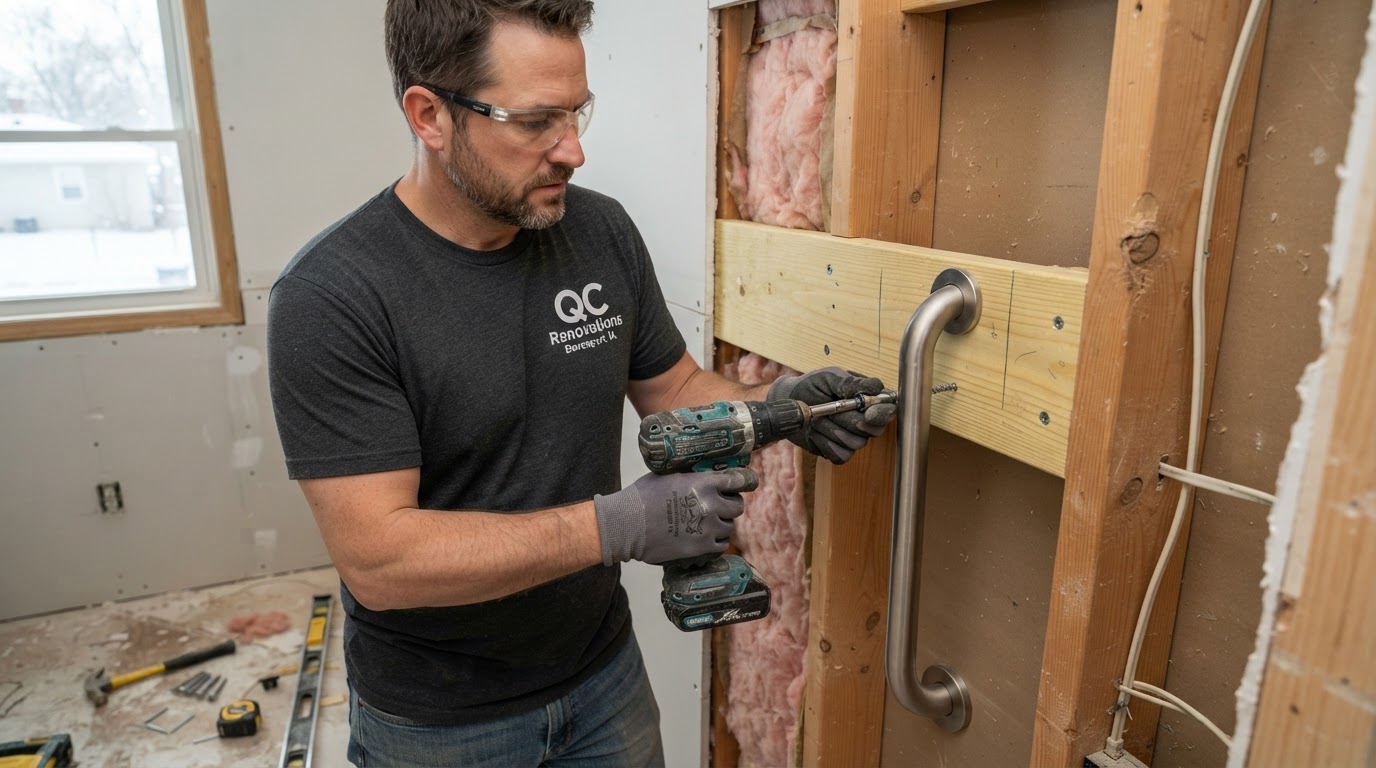
Quick Tip: Add Blocking Even If You Do Not Need Bars Yet
If you are remodeling anyway, have your contractor install wood blocking in the shower and toilet walls. It costs very little during construction. Later, you can add grab bars without opening the wall again.
Curbless Shower vs Walk-In Tub: Which Is Right for You?
The two most common aging-in-place bathroom upgrades are a curbless walk-in shower and a walk-in tub. Both reduce fall risk, but they serve different needs and have real trade-offs.
Curbless Walk-In Shower
A curbless shower has no step at the entry. The bathroom floor flows straight into the shower, often with a linear drain. It works for walkers, wheelchairs, and anyone with limited mobility. It looks modern and adds strong resale value.
The trade-off is cost. Going curbless adds 20 to 30% to a standard walk-in shower conversion because it requires floor re-sloping, a linear drain, and extra waterproofing. In older Quad Cities homes with shallow joists, the work can be more complex.
Walk-In Tub
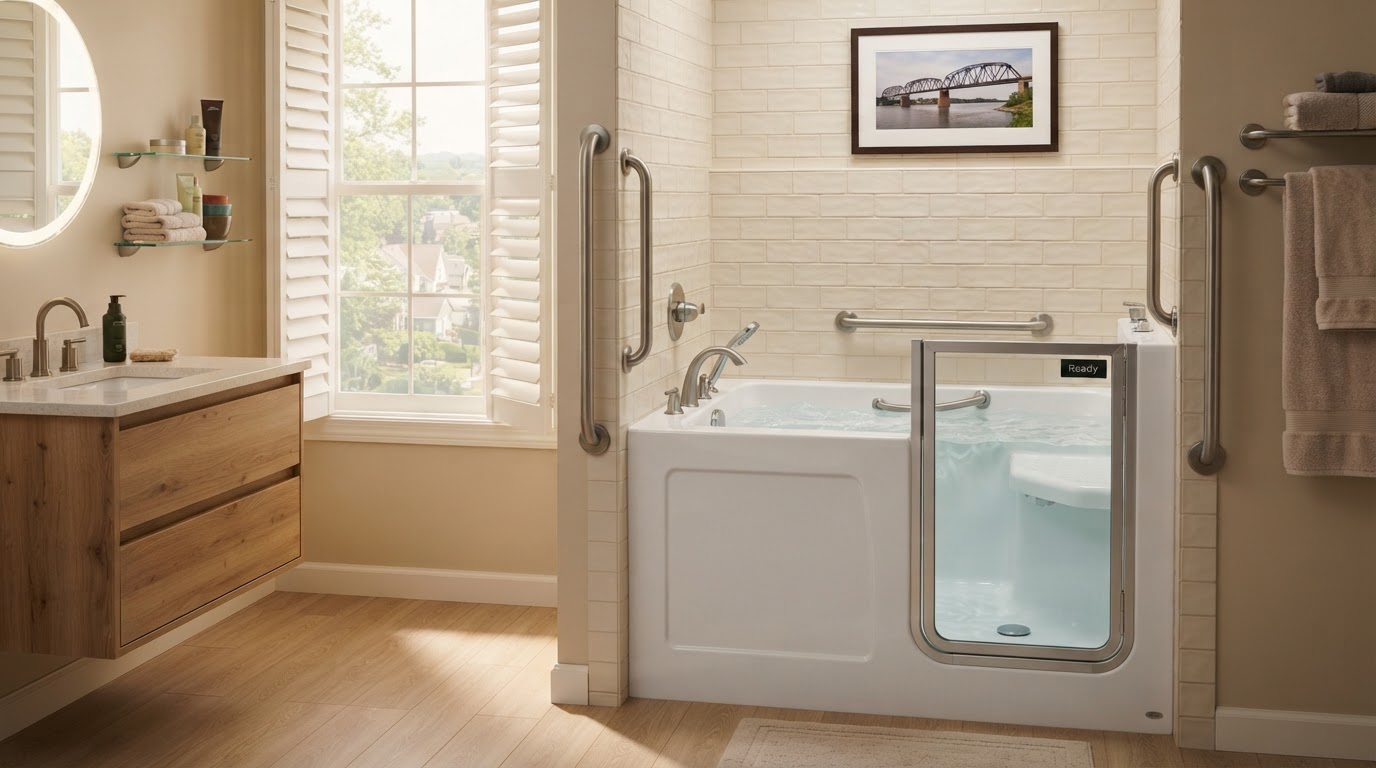
A walk-in tub has a sealed door and a low step. You walk in, sit down, close the door, and fill the tub. Many models include hydrotherapy jets. They are a good fit for homeowners who prefer soaking and want the safety of a seated bath.
The trade-offs are wait time and space. You must sit in the tub while it fills and drains, which can take 10 to 15 minutes. Walk-in tubs also take up significant floor space. In our experience, Bettendorf homeowners with smaller bathrooms often find a curbless shower a better use of space.
What ADA-Inspired Means in a Private Home
The Americans with Disabilities Act (ADA) sets standards for public and commercial spaces. It does not apply to private homes. But ADA guidelines are a useful reference for designing an accessible residential bathroom.
When contractors say ADA-inspired or ADA-compliant for a home, they mean following those design principles: 36-inch doorways, grab bar placement at the right height, adequate turning radius for a wheelchair, and accessible fixture heights. The goal is a bathroom that works for everyone, not just one that meets a legal code.
In our experience, the best aging-in-place bathrooms use universal design. That means features that help people of all ages and abilities, not just those with current mobility limits. A curbless shower, lever handles, and better lighting benefit a young family as much as a retiree.
Aging-in-Place Bathroom Costs by Feature
Here is a breakdown of common aging-in-place upgrades and their typical cost adds in the Quad Cities. These are installed ranges based on 2025 to 2026 contractor bids.
- Standard walk-in shower conversion: $6,000 to $12,000 installed. The base for most accessibility projects.
- Curbless zero-entry upgrade: Adds 20 to 30% to the shower cost. Covers re-sloping, linear drain, extra waterproofing.
- Blocked-in grab bars: $150 to $400 each during a remodel. Far more if retrofitted later.
- Fold-down bench: $500 to $1,200. Wall-mounted and anchored into studs.
- Handheld showerhead with slide bar: $200 to $500. Allows seated or standing use.
- Comfort-height toilet: $250 to $600 installed. Taller seat for easier transfers.
- Walk-in tub: $5,000 to $12,000 installed. Varies by brand and hydrotherapy features.
- Full accessible bathroom remodel: $15,000 to $30,000. Combines multiple features, layout changes, and fixture upgrades.
Want to see what your aging-in-place remodel will cost?
Get My Accessibility EstimateFree • No-obligation • No high-pressure sales
Plan Ahead: Remodel Before a Fall, Not After
The biggest mistake Quad Cities homeowners make is waiting. Most aging-in-place remodels happen after a fall or a health scare, when the family is under pressure to act fast. That leads to rushed decisions, higher costs, and fewer choices.
Planning ahead gives you time to compare contractors, choose materials, and schedule the work on your terms. It also lets you fold accessibility features into a broader bathroom remodel, which is far cheaper than retrofitting later.
In our experience, homeowners in Davenport's McClellan Heights and Bettendorf's Middle Park neighborhoods who plan ahead get better results. They install blocking during a routine remodel, add a curbless entry before mobility declines, and avoid the emergency retrofit that costs twice as much.
Quick Tip: Bundle Accessibility Into Your Next Remodel
If you are already remodeling your bathroom, add blocking, wider doorways, and a curbless entry. The marginal cost is small during construction. Retrofitting these features later costs two to three times more.
CAPS-Certified Pros on Our Team
NAHB offers a Certified Aging-in-Place Specialist (CAPS) designation for contractors who specialize in accessibility work. CAPS-trained pros understand universal design, mobility needs, and the specific products that make a bathroom safe.
Our team includes crew members trained for accessibility remodeling. When you request a match for an aging-in-place project, we prioritize pros with accessibility experience.
Financing
Many of Our crew offer financing connections through partners like LightStream and LendingTree. If you are planning a larger accessible bathroom renovation, ask your matched pros about financing options during your quote calls. Some local aging agencies also offer limited grant programs.
How Our Process Works for Accessibility Projects
Quad Cities Home Renovation is a free renovation company. You tell us about your aging-in-place bathroom project. We quote you with 2 to 3 licensed, insured local crew members who have accessibility experience. You compare quotes and choose the right pro. Zero pressure, zero fees.
Our contractors know Quad Cities housing stock. They have worked in older Davenport bungalows, Bettendorf split-levels, and Moline ranch homes. They understand freeze-thaw cycles, older plumbing, and local permit rules. They also know how to design a bathroom that looks beautiful, not institutional.
Why Choose Quad Cities Home Renovation?
Quad Cities Home Renovation is a FULL-SERVICE RENOVATION COMPANY, not a contractor. We serve Quad Cities homeowners with licensed and insured renovation contractors. Your estimate is always free.
- Licensed crew: Every member of our network holds $1M+ general liability insurance and active Iowa or Illinois licensing.
- Accessibility focus: We prioritize pros with aging-in-place and universal design experience for these projects.
- Local knowledge: Our pros know Davenport's historic district permit rules, Bettendorf's flood zone codes, and Moline's building inspector schedule.
- Zero pressure: You compare quotes quotes and choose the right fit, or walk away entirely. Free, no-obligation, no high-pressure sales.
Ready to plan your aging-in-place bathroom?
Get a quote from 2-3 Quad Cities accessibility specialists free.
Free • No-obligation • No high-pressure sales