
Renovating an Older Home in the Quad Cities: Lead Paint, Knob-and-Tube & Cast Iron Plumbing (2026)
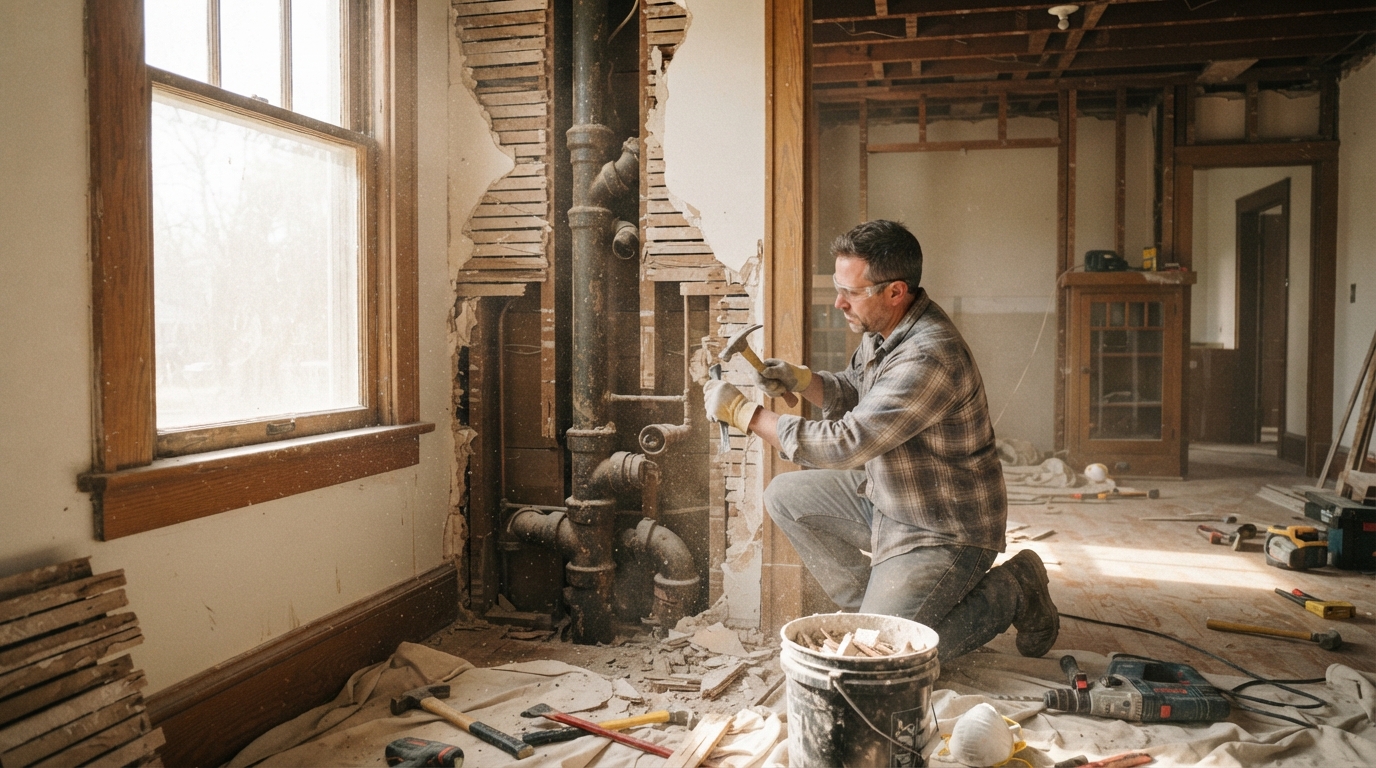
Renovating an old house in the Quad Cities is a different process than updating a newer build. Davenport, Bettendorf, and Rock Island have thousands of beautiful pre-1978 homes full of character.
They also have lead paint, knob and tube wiring, cast iron plumbing replacement needs, and plaster and lath walls that require specialized contractors. Here is what you need to know before you start.
By the Numbers
- Federal law requires an EPA RRP Lead-Safe Certified contractor for pre-1978 homes, with penalties up to $37,500 per violation.
- Cast iron drain stack replacement typically costs $1,500 to $4,000 when done during a remodel.
- We recommend a 15 to 25 percent contingency budget for homes built before 1960.
What Counts as an "Older Home" in the Quad Cities?
In the Quad Cities, an "older home" generally means any house built before 1978. That year is the critical cutoff because the federal government banned lead-based paint for residential use in 1978. If your Davenport or Bettendorf home was built before that date, special renovation rules apply.
Davenport's pre-1978 housing stock is concentrated in historic neighborhoods like Hilltop, McClellan Heights, Vander Veer, and the Village of East Davenport. These areas feature stunning Craftsman bungalows, American Foursquares, and mid-century ranches.
They also feature aging infrastructure that a standard drywall contractor is not equipped to handle safely. In our experience, homeowners in McClellan Heights frequently discover galvanized pipes and outdated electrical systems behind their walls during what was supposed to be a simple kitchen refresh.
Knowing what is behind your walls before you start demolition is the key to a successful older home renovation.
Lead Paint in Pre-1978 Homes: The RRP Rule
If your home was built before 1978, you must assume it contains lead paint unless a certified inspector proves otherwise. The EPA's Renovation, Repair, and Painting (RRP) rule requires that any contractor disturbing painted surfaces in these homes must be EPA RRP Lead-Safe Certified.
This is not a suggestion. It is federal law. Contractors must use lead-safe work practices, including:
- Plastic sheeting to contain dust
- Specialized HEPA vacuums for cleanup
- Proper disposal procedures for contaminated materials
Penalties for violating the RRP rule reach $37,500 per violation. The Iowa Department of Health and Human Services (Iowa HHS) oversees the lead-poisoning-prevention program and enforces these rules at the state level.
Critical Warning: Do Not DIY Lead Paint Removal
Scraping, sanding, or torching lead paint creates toxic dust that poisons children and pets. Only an EPA RRP Certified contractor should disturb painted surfaces in a pre-1978 Quad Cities home.
When you hire a contractor with our crew, we verify their EPA RRP certification. This protects your family and your liability. A contractor who skips lead-safe practices to save time is putting your household at serious risk.
Knob-and-Tube Wiring & Electrical Panels
Homes built before 1950 often contain knob and tube wiring, an early standardized electrical wiring method. It uses ceramic knobs to hold wires away from framing and ceramic tubes to pass through joists. While it was safe in its day, it is a major liability now.
Knob-and-tube wiring has no ground wire, which means modern three-prong appliances are not safely grounded. The rubber insulation on the wires also degrades over time, creating fire hazards.
Many insurance companies in Iowa and Illinois will not insure a home with active knob-and-tube wiring, or they charge significantly higher premiums.
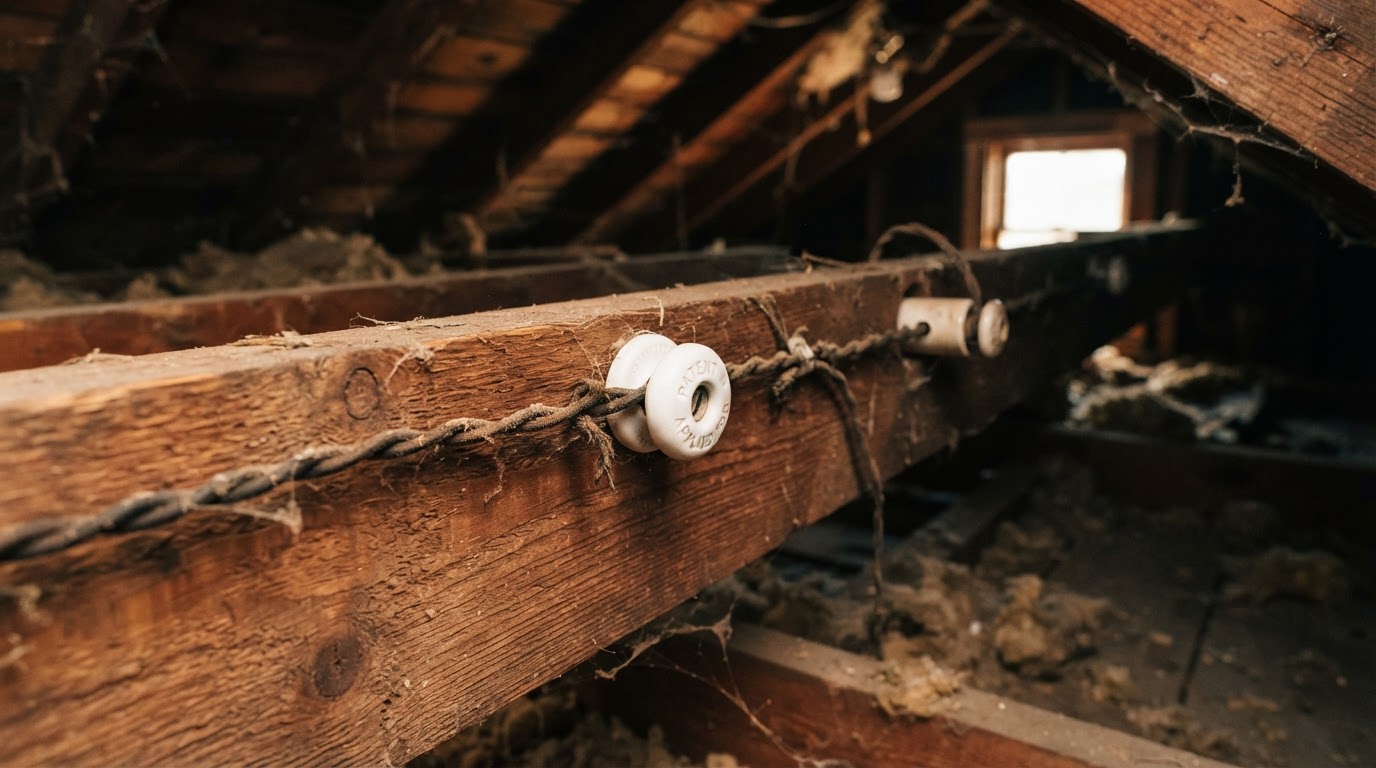
Replacing knob-and-tube wiring throughout an entire home typically costs $8,000 to $15,000. The cost depends on:
- Home size and number of circuits
- Attic and basement access for running new wires
- How many circuits need to be brought up to modern code
If you are already opening walls for a kitchen or bathroom remodel, it is the perfect time to rewire.
Quick Tip: Upgrade Your Panel Too
If your home still has knob-and-tube wiring, your electrical panel is likely undersized for modern needs. Upgrading to a 200-amp panel during your rewire avoids a separate permitting and inspection process later.
Cast Iron & Galvanized Plumbing Replacement
Older Quad Cities homes typically have two types of aging plumbing: cast iron drain stacks and galvanized supply lines. Both cause problems that a standard remodel will not fix.
Cast iron drain pipes last 50 to 100 years, but they corrode from the inside out. In our experience, we frequently find cracked cast iron stacks hidden behind bathroom walls in 1920s Davenport homes. When they fail, the water damage is extensive.
Cast iron plumbing replacement costs $1,500 to $4,000 when done during a remodel, which is far cheaper than an emergency cleanup after a pipe bursts.
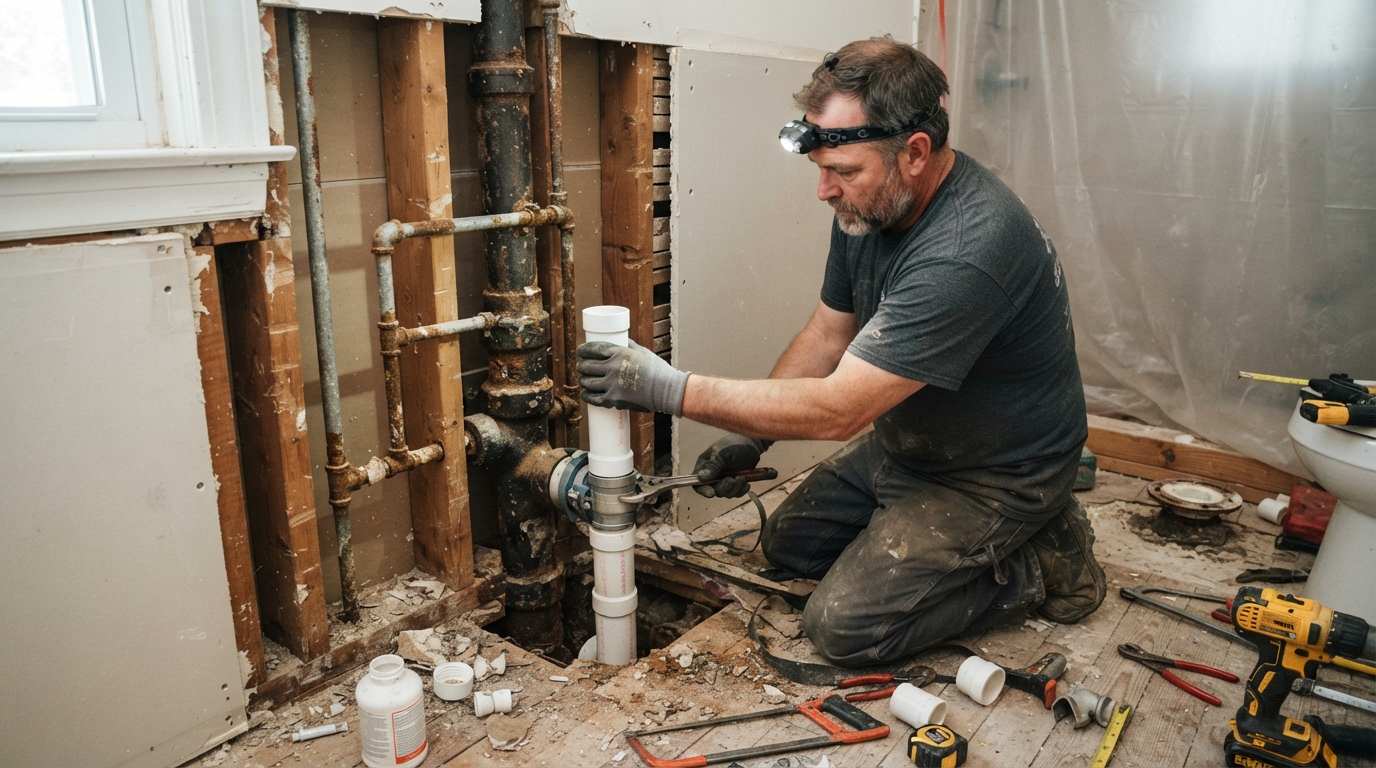
Galvanized steel supply lines are the other major issue. They rust internally, which restricts water flow and turns your water brown. Replacing galvanized pipes with copper or PEX costs $1,500 to $4,000 depending on how much of the home is being remodeled.
If your walls are already open, replacing these pipes is a smart investment that prevents future headaches.
If you are planning a basement finishing project, have your contractor inspect the main drain line first. Many older Quad Cities homes have clay tile sewer lines that are prone to root intrusion and collapse.
Plaster and Lath Walls: Demo Cost & Options
Before drywall became standard in the 1950s, homes used plaster and lath walls. Wooden lath strips were nailed to the studs, and multiple layers of wet plaster were spread over them. The result is a thick, dense wall that provides excellent soundproofing but is difficult to modify.
Removing plaster and lath walls creates significantly more dust and debris than removing drywall. The demolition costs more in labor and disposal fees. However, if you need to run new electrical wiring or plumbing, the lath must come down.
If the plaster is in good condition, you have two options:
- Repair and skim-coat: Fix cracks and apply a thin layer of compound for a smooth finish.
- Overlay with drywall: Install new drywall directly over the plaster to save on demolition costs.
Both approaches save money compared to a full gut. In our experience, homeowners in the Village of East Davenport are often surprised to find their plaster walls are still structurally sound after 90 years.
Asbestos in 1960s and 1970s Homes
If your Quad Cities home was built or remodeled between 1940 and 1977, asbestos may be present in:
- Floor tiles (especially 9x9 vinyl tiles)
- Pipe insulation on heating systems
- Joint compound on drywall seams
- Popcorn ceilings
You cannot identify asbestos by sight. The only way to know is to have a licensed inspector test suspect materials. If asbestos is found, it must be removed by a licensed abatement contractor before any demolition begins.
Do not attempt to remove asbestos yourself. Disturbing asbestos releases microscopic fibers into the air that cause mesothelioma and lung cancer. The abatement process adds time and cost to your project, but it is non-negotiable for your family's safety.
Budgeting for an Older Home Renovation
The biggest mistake homeowners make with older homes is underestimating the budget. You simply cannot see everything behind the walls until you open them. A standard 10 percent contingency is not enough for a pre-1960 home.
We recommend a 15 to 25 percent contingency for homes built before 1960, and a standard 10 percent contingency for homes built after 1978.
The older the home, the higher the likelihood of discovering hidden issues like knob-and-tube wiring, galvanized pipes, or structural surprises behind plaster walls.
Contingency Budget by Home Era
| Home Era | Common Issues | Recommended Contingency |
|---|---|---|
| Pre-1930 | Knob-and-tube wiring, cast iron drains, lead paint, plaster | 20 to 25% |
| 1930 to 1959 | Lead paint, galvanized pipes, aging plaster | 15 to 20% |
| 1960 to 1977 | Lead paint, possible asbestos, aluminum wiring | 15% |
| 1978+ | Standard construction, no lead paint | 10% |
Contingency percentages are guidelines based on our experience with Quad Cities renovations. Your actual contingency depends on the scope of work and the condition of your home.
Before you start, make sure you understand the permit requirements in Davenport and Bettendorf. Older homes often trigger additional inspections, especially for electrical and plumbing work.
How to Pick a Contractor for an Older Home
Not every contractor is qualified to work on an older Quad Cities home. You need someone who understands historic construction methods, knows how to handle lead paint safely, and will not panic when they find knob-and-tube wiring behind a bathroom wall.
Here is what to look for when hiring a contractor for an older home renovation:
- EPA RRP Lead-Safe Certification: Required by law for any work disturbing paint in pre-1978 homes. Ask to see their certification.
- Experience with pre-1960 homes: Ask for references from similar projects in McClellan Heights, Hilltop, or the Village of East Davenport.
- Plaster repair skills: Matching old plaster texture is an art. A drywall-only contractor may not have this skill.
- Knowledge of local codes: Davenport and Bettendorf have specific permit requirements for older homes. Your contractor should know them cold.
- Honesty about hidden costs: A good contractor will explain the risks of opening old walls and build a contingency into the estimate upfront.
Also, ask about timelines. Older homes take longer to renovate because of lead-safe procedures, plaster removal, and unexpected structural repairs. Learn more about how long a home renovation takes in Iowa so you can plan accordingly.
Why Choose Quad Cities Home Renovation for Your Older Home Renovation
At Quad Cities Home Renovation, we specialize in matching Quad Cities homeowners with contractors who have the exact qualifications needed for older homes. We verify EPA RRP Lead-Safe Certification, Iowa DIAL registration, and $1 million in general liability insurance for every contractor on our team.
- Screened for experience: Our licensed crew has worked on everything from 1900s Craftsman bungalows in the Village of East Davenport to mid-century ranches in Bettendorf.
- Right fit matching: When you submit a project, We quote you with 2 to 3 contractors who have the specific experience your older home demands.
- Zero pressure: You compare quotes and choose with confidence, or walk away entirely. The service is free for homeowners.
Ready to Renovate Your Older Home?
Get a free quote from our Quad Cities crew experienced with pre-1978 homes, lead paint, and historic construction.
Ready to renovate your older home?
Get a quote from 2-3 Quad Cities contractors experienced with pre-1978 homes, lead paint, and historic construction.